
If you’ve ever wondered what today’s young people are really looking for in a career, you’re not alone.
Parents are trying to support their children through career decisions. Employers are competing for the next generation of workers. Schools are preparing students for a rapidly changing workforce.
AI is reshaping the way we work, new careers are emerging almost overnight, and social media has created opportunities that didn’t exist a decade ago. In a world where jobs are changing faster than ever, understanding what today’s young people value has never been more important.
But how often do we actually ask young people what matters most to them?
That’s exactly what CCGT set out to do.
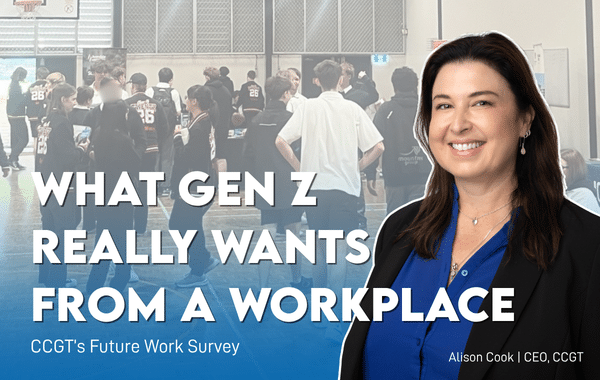
Over recent months, more than 300 Central Coast students shared their thoughts, priorities and career aspirations through the CCGT Future Work Survey, providing valuable insights into what influences career decisions and what they’re really looking for in a workplace.
“At CCGT, we’re always looking at ways we can better support young people and local employers,” said Alison Cook, CEO of CCGT.
“This survey gave us the opportunity to better understand what today’s students are looking for, not just when they’re choosing a career, but when they’re deciding where they want to work and what kind of workplace will help them succeed.”
Looking beyond the stereotypes
There’s no shortage of opinions about what young people want from work.
Rather than relying on assumptions, CCGT wanted to hear directly from the people entering the workforce.
“There’s no shortage of opinions about what young people want from work, but we felt it was important to ask them directly,” Alison said.
“If we’re going to support the next generation into meaningful careers, we need to start by listening.”
The findings suggest that while today’s young people have more career options than ever before, the things they value most aren’t necessarily what many people expect.
It’s not just about the pay cheque
One of the clearest messages from the survey was that workplace culture matters.
Students consistently ranked friendly teams, respect, good training, safety and supportive managers among the most important factors when considering a workplace.
The research also reinforced the importance of clear communication throughout the recruitment process and the confidence that comes from knowing what to expect before starting a role.
“For me, the biggest takeaway was that young people are looking for more than just pay,” Alison said.
“They want to feel welcomed, respected and supported. They want to know they’ll be given the opportunity to learn and grow, and that’s something every workplace can reflect on.”
One finding that stood out was just how much importance students placed on the people they’d be working with.
“I wasn’t surprised that pay is important, but I was surprised by just how much value young people place on the people around them. Having a friendly team, supportive managers and good training consistently came through as some of the most important factors. It really shows that culture isn’t just a nice-to-have, it’s something young people are actively looking for.”
Families and employers both have a role to play
The survey highlighted that parents remain one of the biggest influences on a young person’s career decisions, alongside their own aspirations and interests.
It also showed that practical experiences such as work experience, career pathway information and mentoring continue to play an important role in helping young people make informed decisions about their future.
“Parents have such an important influence when young people are making career decisions,” Alison said.
“We hope these insights help families have open conversations about the different pathways available and encourage young people to explore opportunities they may not have considered before.”
The findings also give employers a better understanding of what young people value when they’re deciding where to work.
“The research is a great reminder that attracting young people isn’t just about advertising a vacancy,” Alison said.
“It’s about creating an environment where people feel supported from the very beginning. Clear communication, good leadership and genuine investment in your people can make all the difference.”
More than research
For CCGT, the survey is the beginning of a bigger conversation.
The findings will help inform the organisation’s recruitment practices, career education initiatives and the support it provides to apprentices, trainees and host employers.
“This wasn’t about proving a point or comparing generations,” Alison said.
“It was about better understanding the young people who’ll soon be entering our local workforce, so employers, schools and families can help set them up for success.”
CCGT will continue sharing insights from the Future Work Survey over the coming months, exploring what they mean for young people, employers and the future of work on the Central Coast.
“We’re only just scratching the surface,” Alison said.
“Over the coming months we’ll be sharing more of what we learnt because we believe these insights can help shape stronger workplaces, better career conversations and brighter futures for young people across our region.”
Follow CCGT on social media as we unpack more findings from the Future Work Survey and explore what they mean for young people, parents, schools and employers across the Central Coast.