
When manufacturers are looking for new employees, experience and technical skills are often high on the list. But could that approach mean overlooking people who have plenty to offer, simply because they’ve never worked in the industry?
It’s a question worth asking as Central Coast manufacturers look for ways to attract new talent and build their future workforce.
Through CCGT’s ManufactHER program, local manufacturing businesses are exploring how recruitment practices, workplace culture and the way businesses operate can affect who applies and who stays.
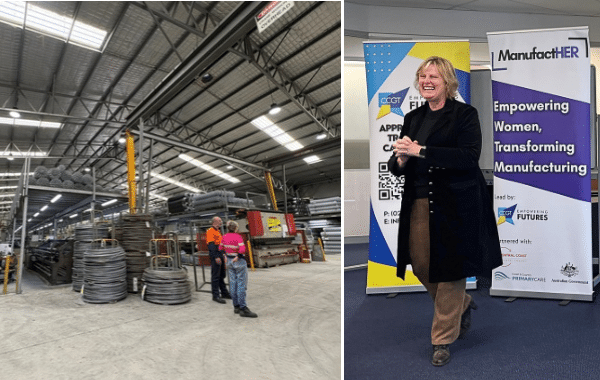
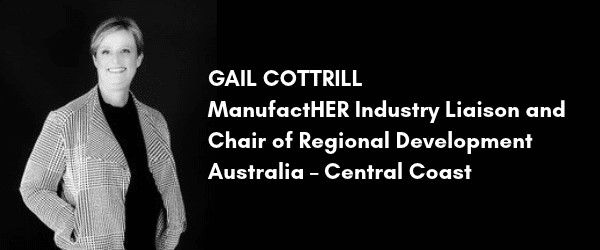
Gail Cottrill brings years of experience in manufacturing and regional development to her role as Industry Liaison for the ManufactHER project team.
As a former manufacturing business owner and current Chair of Regional Development Australia – Central Coast, she knows the industry from both a business and regional perspective.
For Gail, attracting more women into manufacturing is about more than encouraging them to apply for jobs. It’s also about what manufacturers can do differently.
Looking beyond experience
One of Gail’s strongest messages to manufacturers is to reconsider what they’re looking for when recruiting.
“I think manufacturers need to stop looking necessarily for skills and start looking for traits of people.”
Gail points to qualities such as organisational skills, attention to detail and situational awareness as examples of what people can bring to a workplace, even without direct manufacturing experience.
Someone changing careers, returning to work or coming from another industry may already have skills that could be valuable in manufacturing, even if they haven’t thought to apply them there.
“You can see that there’s transferable skills that they can apply to the job instead of just saying, I haven’t got that experience, I’ve never done that before, therefore I can’t apply.”
That doesn’t mean technical skills and qualifications aren’t important. But for roles where training can be provided, looking at a person’s potential alongside their experience could help employers reach candidates they might otherwise miss.
It’s an approach that also asks manufacturers to think about how they advertise opportunities, describe the skills required and communicate what makes their workplace a good place to work.
During ManufactHER Cohort 1, participating businesses explored these questions through an Employer Attraction and Inclusive Recruitment Workshop, looking at how job advertisements, recruitment language and employer messaging can encourage a broader range of people to apply.
Changing perceptions of manufacturing
Recruitment is only one part of the challenge. Gail believes outdated perceptions of manufacturing are also preventing people from considering the industry.
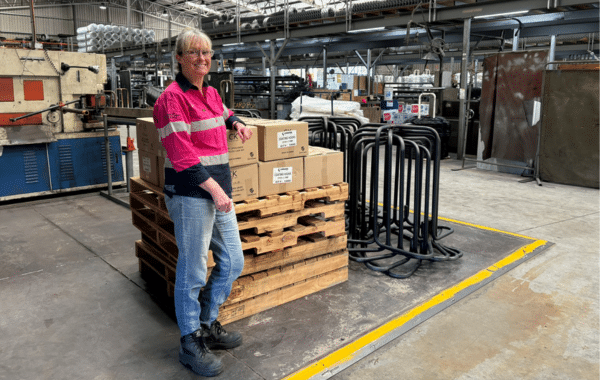
For some, manufacturing still brings to mind heavy, dirty or physically demanding work. While those roles remain part of the industry, they don’t tell the whole story.
“Manufacturing looks different today,” Gail says.
She points to the growing use of robotics and automation, along with the range of different skills and career pathways that exist within modern manufacturing.
“I don’t think that we have been selling the story of manufacturing being so diverse in the array of career paths.”
From production and engineering to logistics, quality control, technology and leadership, manufacturing offers opportunities that aren’t always visible to people outside the industry.
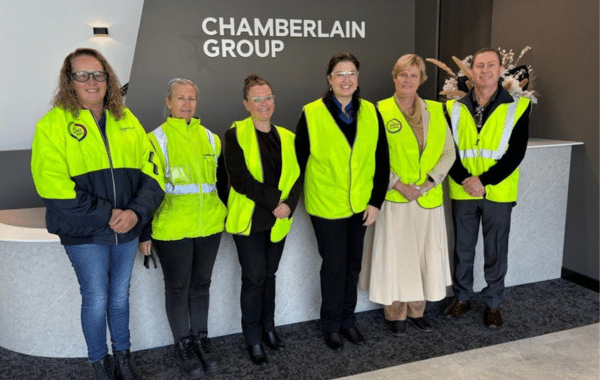
Sharing those stories, particularly through the experiences of women already working in manufacturing, is something Gail would like to see more of.
For local businesses, it’s also a chance to show young people and career changers what working in manufacturing actually looks like.
Attracting people is one thing. Keeping them is another.
Even when someone can see a future in manufacturing, the way a workplace operates can influence whether that career is practical for them.
Gail identifies traditional working hours as one of the barriers manufacturers need to consider, particularly for people balancing work with caring responsibilities.
She acknowledges that manufacturing businesses often operate within tight production schedules and commercial pressures, making flexibility more complicated than it might be in other industries.
But she believes it’s important to question whether established ways of working are always the only option.
Not every manufacturing role can offer the same flexibility. The opportunity is for businesses to look at where they could do things differently and how their workplace practices could better support a broader range of employees.
It’s a conversation that extends beyond women, with potential benefits for people at different stages of their working lives.
As Gail explains, the bigger goal is making manufacturing more accessible.
“It’s about trying to make the entire manufacturing space much more amenable to and accessible to everyone.”
What ManufactHER is learning
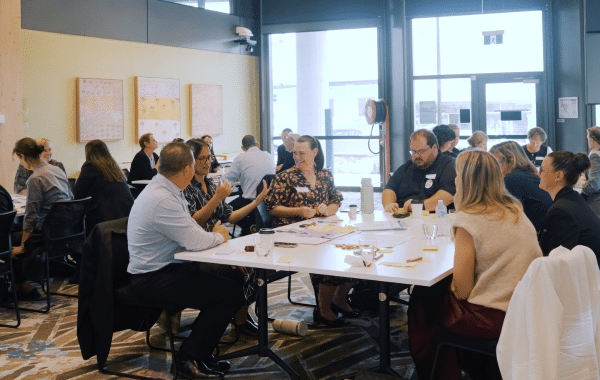
For the Central Coast businesses involved in ManufactHER Cohort 1, these conversations have been part of a broader opportunity to examine workplace practices, build leadership skills and explore ways to attract and retain more women.
The program has included practical workshops on recruitment and workplace flexibility, alongside leadership development opportunities.
In June, participants in the EmpowerHER Women in Manufacturing Leadership Program celebrated six months of learning, connection and professional growth.
For Gail, one of the most encouraging outcomes of Cohort 1 has been seeing businesses become more open to questioning established ways of working.
“They haven’t necessarily completely shifted their thinking, but they’ve been more open to shifting their thinking and more open to being challenged.”
For Gail, that willingness to engage is an important starting point.
She is also encouraged that Cohort 1 businesses want to remain connected as the program moves into Cohort 2, sharing their experiences while continuing to learn from other manufacturers.
Building on the first cohort
As ManufactHER moves into its second cohort, Gail sees an opportunity to build on what’s been learned and help businesses put that learning into practice.
She says the training offered through Cohort 2 has been strengthened by the experience of the first group.
But she is realistic about the time it takes to change workplace attitudes and established practices.
“It’s going to be a slow build for those businesses to maybe change some of their internal mechanisms or their internal attitudes.”
For Gail, the next stage is about continuing that work within businesses while also raising awareness of the opportunities manufacturing offers.
She would particularly like to see more women working in the industry share their experiences, helping others understand the range of careers available and challenging some of the assumptions that have followed manufacturing for generations.
For Central Coast manufacturers thinking about their future workforce, perhaps one of the most useful questions is also one of the simplest:
Are we looking for people who have already done the job, or are we also recognising people who have the potential to do it?
ManufactHER is a CCGT project delivered in partnership with Central Coast Industry Connect and Coast & Country Primary Care. Selected under the Building Women’s Careers Program, ManufactHER supports greater participation, career development and leadership opportunities for women in manufacturing on the Central Coast.
The Building Women’s Careers (BWC) Program is funded by the Australian Government Department of Employment and Workplace Relations.
READ NEXT
→ Attracting a broader range of talent into manufacturing
See how Central Coast manufacturers explored more inclusive recruitment practices through ManufactHER’s Employer Attraction and Inclusive Recruitment Workshop.
→ Celebrating women in manufacturing leadership
Take a look at the EmpowerHER Women in Manufacturing Leadership Program and how participants celebrated six months of learning, connection and professional growth.